2005 Puesto n.º 4397 en BGG

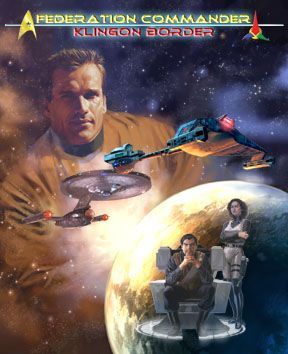
Federation Commander: Klingon Border

2–8 jugadores 60 min A partir de 12 años 3.4/5 de complejidad 5.8/10 de valoración

Acerca de este juego

From the designer of Star Fleet Battles, Federation Commander is the fast moving game of starship combat in the Star Fleet Universe. Mounted game boards, laminated full color ship control cards and gorgeous full color counters highlight this re-imagining of the Star Fleet Universe with 21st century production values. This was the initial product for Federation Commander, and was the original base set. There are other base sets and expansions for the Federation Commander Series. Much effort has gone into streamlining the game - there are 8 impulses rather than 32. One die roll allocates up to 10 points of damage, rather than 2 dice per damage point that strikes the ship. Color coded charts and ship cards reduce the mental overhead of remembering what goes where. Gone is the tax form of energy allocation, replaced by a free flowing dynamic "on the fly" power allocation system. Maneuver has had countless special cases removed and streamlined. This is not an introduction to Star Fleet Battles, but a re-imagining of starship combat in the Star Fleet Universe, redesigned from the ground up to appeal to a wider audience and reduce rules lawyer-ism. Included in the rules are the 'free form" (hexless) movement rules that have been in use for years; the hex map is scaled for miniatures bases, and the game is designed to be easy to port over to miniatures adaptations.

Qué sensaciones ofrece

Simulation Hexagon Grid Simultaneous Action Selection Dice Rolling Action Points Scenario / Mission / Campaign Game Science Fiction Wargame Movies / TV / Radio theme

Explora estas mecánicas en Cardboard

Crea un prototipo original con patrones de diseño reutilizables, no con el contenido de este juego.

Abrir el taller de mecánicas

Inteligencia del juego

Aprende el juego

100% de cobertura de conocimiento

Preparación

1. Identify which ships have the 'Carrier' designation — only these ships may use fighter squadron rules (Hydran non-carriers do not qualify for reserve rules). 2. For each carrier, note the number of shuttle boxes on its SSD. Subtract one for the administrative shuttle; the remainder equals the maximum fighter steps the carrier may hold. 3. Fill in the carrier's Launch Track 'Landed' box capacity value based on the ship. 4. If the scenario states fighters are armed, place squadron counters in the 'Launch' box of the Launch Track. If not armed, place them in the #1 'Arming' box. 5. Ensure the total steps on the Launch Track do not exceed the number of undamaged shuttle boxes.

Flujo del turno

Each game round is divided into impulses. During the Launch Shuttles Phase of each impulse: 1. Any counters in an Arming box are advanced one box higher (box #8 advances to 'Launch'; counters in 'Landed' advance to box #1). 2. The carrier may launch any number of counters currently in the 'Launch' box, provided they pass through an open shield. 3. Fighter squadrons that began the phase in the same hex as a friendly same-empire carrier may land (placed in the 'Landed' box, subject to capacity and shuttle box limits). 4. Fighters may attack ships (range 0–3, forward arc only) and initiate dogfights with enemy squadrons in the same hex. All fighter actions besides movement — launching, landing, attacking ships, and dogfighting — are conducted during the Launch Shuttles Phase. Fighter movement is handled in the standard movement phase with a speed of 16, turn mode 1, and one free high-energy turn per sortie.

Puntuación y victoria

Standard Federation Commander victory conditions apply (scenario-dependent). The fighter/carrier rules supplement does not introduce new scoring mechanisms. Fuentes de puntuación: Scenario-defined victory conditions (ship destruction, objective control, etc.)

Fuente: Rulebook

Reglas que debes conocer

Las reglas más útiles para jugar bien la primera partida.

General

A fighter counter represents a full or reduced squadron of attack shuttles, measured in steps.

A fighter counter does not represent a single attack shuttle; it represents a full or reduced squadron. Each counter is double-sided: the full-strength side represents 2 steps (Attack 10 / Defense 7) and the reduced-strength side represents 1 step (Attack 3 / Defense 3). The squadron is an abstracted mix of heavy bomber-style shuttles (firing torpedoes or drones) and escort fighter-style shuttles.

Restriction

The number of fighter steps aboard a carrier may never exceed its undamaged shuttle boxes.

Each shuttle box on a carrier's SSD represents one step of fighter strength (excluding the one administrative shuttle box). The total number of fighter steps aboard the carrier — including all counters on the Launch Track — may never exceed the number of undamaged shuttle boxes. If a carrier receives a 'Shuttle' hit that reduces the number of undamaged shuttle boxes below the current step count, the owning player must immediately reduce full-strength counters and/or eliminate reduced-strength counters (owner's choice) until steps no longer exceed undamaged shuttle boxes.

General

The Launch Track has 10 boxes: Landed, Arming #1–#8, and Launch. All counters on it are considered inside the carrier.

Each carrier has a Launch Track with 10 boxes: one 'Landed' box, eight 'Arming' boxes numbered 1–8, and one 'Launch' box. Any counters on this track are considered onboard the carrier. The total steps on the track may never exceed the number of undamaged shuttle boxes. This track does not receive damage from combat.

Turn structure

During the Launch Shuttles Phase, fighters in Arming boxes advance one box; box #8 advances to Launch; Landed advances to box #1.

During the Launch Shuttles Phase of each impulse, any squadron counters in an Arming box are moved to the next higher-numbered box. A counter in Arming box #8 moves to the 'Launch' box. A counter in the 'Landed' box moves to Arming box #1. This advancement occurs before landing.

General

Fighters in the Launch box are fully armed and may be launched during the Launch Phase of the next impulse.

The 'Launch' box on the Launch Track indicates that the fighter squadrons inside are fully armed and ready for deployment. They may be launched during the Launch Phase of the upcoming impulse. Note: Launching takes priority over landing when determining whether the maximum number of steps on the Launch Track is exceeded.

General

The Landed box holds squadrons that have just landed; its capacity is written on the track by the player.

The 'Landed' box on the Launch Track holds fighter squadrons that land during the Launch Shuttles Phase. The maximum number of steps that may be placed here equals the value written on the track (filled in by the player based on the ship). The total steps in the Landed box also cannot cause the total steps on the track to exceed the number of undamaged shuttle boxes.

Special

Fighters launch during the Launch Phase and must pass through an open shield; only full-strength counters may be launched unless the carrier is on its last step.

Fighters may only be launched during the Launch Phase of an impulse. Only full-strength (2-step) counters may be launched, with one exception: if the carrier is down to its last step (one shuttle box remaining), a reduced-strength counter may be launched. Launched counters must pass through an open shield — either one that was destroyed or one the carrier voluntarily lowered. Any number of counters in the Launch box may be launched in a given impulse. Once launched, each counter begins a 'sortie' that continues until it lands.

Special

Two reduced-strength counters may be combined into one full-strength counter before launching.

If a player has two reduced-strength counters, they may combine them into a single full-strength squadron by flipping one counter to its full-strength side and removing the other. This combined counter can then be launched normally.

Informe estratégico

Shield Management for Carriers

Carriers must lower or sacrifice a shield to both launch and recover fighters (rules: launching_fighters, landing_fighters). Voluntarily lowering a shield creates a significant vulnerability. Savvy opponents will time attacks to exploit that open shield. Position carriers so the open shield faces away from enemy ships, or time launches/landings during impulses when enemies cannot fire.

Targeting Priority When Firing at Squadrons

Because you must designate your target before rolling and excess damage can only spill to other counters, always prioritize reduced-strength (defense 3) counters as your primary target when you expect moderate damage output. A hit on a defense-3 target is almost guaranteed with most weapons, and leftover damage can still threaten full-strength counters (defense 7).

ESG as Anti-Fighter Weapon

The ESG is uniquely powerful against fighters because it can eliminate a full-strength counter in a single attack (two step losses), something phasers cannot do. If playing a Lyran ship, prioritize ESG charges when enemy fighters are threatening. Conversely, if facing a Lyran ESG ship, avoid stacking multiple fighter counters in the same hex.

Sortie Economy and Re-arming Timing

Fighters take 8 full impulses to re-arm after landing (Arming boxes 1–8 plus a launch impulse). Plan sorties so that one wave is landing as another is nearly ready to launch. Sending fighters out too early wastes their two-attack-per-sortie budget; landing them prematurely wastes re-arming time.

Dogfight Advantage with Fresh Squadrons

Full-strength squadrons that have not yet engaged in a dogfight this sortie roll with a +1 bonus, while squadrons that have already fought take a −1 penalty. Committing fresh, full-strength counters to dogfights gives a significant statistical edge. Reserve at least one full-strength counter per hex where you expect dogfights.

Reserve Timing

Each carrier's once-per-game free reserve flip (reduced to full strength) is most valuable when you have a single reduced-strength counter that would otherwise be too weak to combine or launch. Use it proactively rather than waiting until the carrier is nearly destroyed, since the reserves are lost when the last shuttle box is destroyed.

Preguntas frecuentes y casos límite

A carrier takes a 'Shuttle' hit during combat. It now has fewer undamaged shuttle boxes than it has fighter steps on its Launch Track. What happens?

The owning player must immediately reduce full-strength counters (flip to reduced side) and/or eliminate reduced-strength counters, at their own discretion, until the total number of steps on the Launch Track no longer exceeds the number of undamaged shuttle boxes.

A carrier has only one shuttle box remaining (undamaged). Can it launch the reduced-strength fighter counter sitting in its Launch box?

Yes. The restriction that only full-strength counters may be launched is waived when the carrier is down to its last step (one shuttle box remaining). The reduced-strength counter may be launched.

Can an ESG attack destroy a full-strength squadron counter entirely in one attack?

Yes. Unlike phasers (which are limited to one step loss per counter per volley), an ESG can inflict two step losses on one counter in a single attack. If the ESG damage reduces a full-strength counter to reduced strength and there is still enough remaining damage to meet or exceed the reduced counter's defense value (3), that counter is then eliminated.

A ship fires phasers and deals 24 damage into a hex with two full-strength squadrons (defense 7 each) and two reduced-strength squadrons (defense 3 each). How many step losses occur?

Exactly four step losses — one per counter. Even though 4 points of excess damage remain after each counter has taken one step loss, no counter may take more than one step loss per phaser volley. The excess 4 points are lost.

A Federation fighter squadron ends its move in the same hex as a Gorn carrier that is allied with the Federation. Can the Federation fighters land on the Gorn carrier?

No. Fighters may only land on a carrier of the same empire. Even allied carriers of a different empire do not qualify.

A carrier wants to launch fighters but all of its shields are raised and undamaged. Can it still launch?

Yes, but the carrier must voluntarily lower one of its shields to create an opening. Fighters must pass through an open shield — either a previously destroyed one or one the carrier deliberately lowers.

All squadrons in a hex have already engaged in a dogfight this sortie. Does a dogfight still occur?

No. If all squadrons in the hex have already engaged in a dogfight during the current sortie, no dogfight takes place. The fighters are considered out of dogfighting drones.

A full-strength fighter squadron has attacked twice during its current sortie. Opposing fighters enter its hex. Can it initiate a dogfight?

No. A squadron that has attacked twice during its sortie may not initiate a dogfight until it has been re-armed on a carrier and launched on a new sortie.

A carrier uses its once-per-game reserve ability. Can the player place a brand-new counter on the board to represent the reserves?

No. The reserves may not be used to create a new counter. They may only be used to flip a single existing reduced-strength counter to its full-strength side.

The carrier's Launch Track is nearly full. A fighter is in the Launch box ready to launch, and other fighters want to land this impulse. Which happens first for the capacity check?

Launching takes priority over landing in terms of the maximum steps allowed on the Launch Track. Launched counters leave the track first, potentially freeing up capacity for landing fighters.

Pregunta Sobre Este Juego

Juegos similares