2023 Puesto n.º 2128 en BGG

Mythwind

1–4 jugadores 30–60 min A partir de 13 años 2.8/5 de complejidad 6.2/10 de valoración

Acerca de este juego

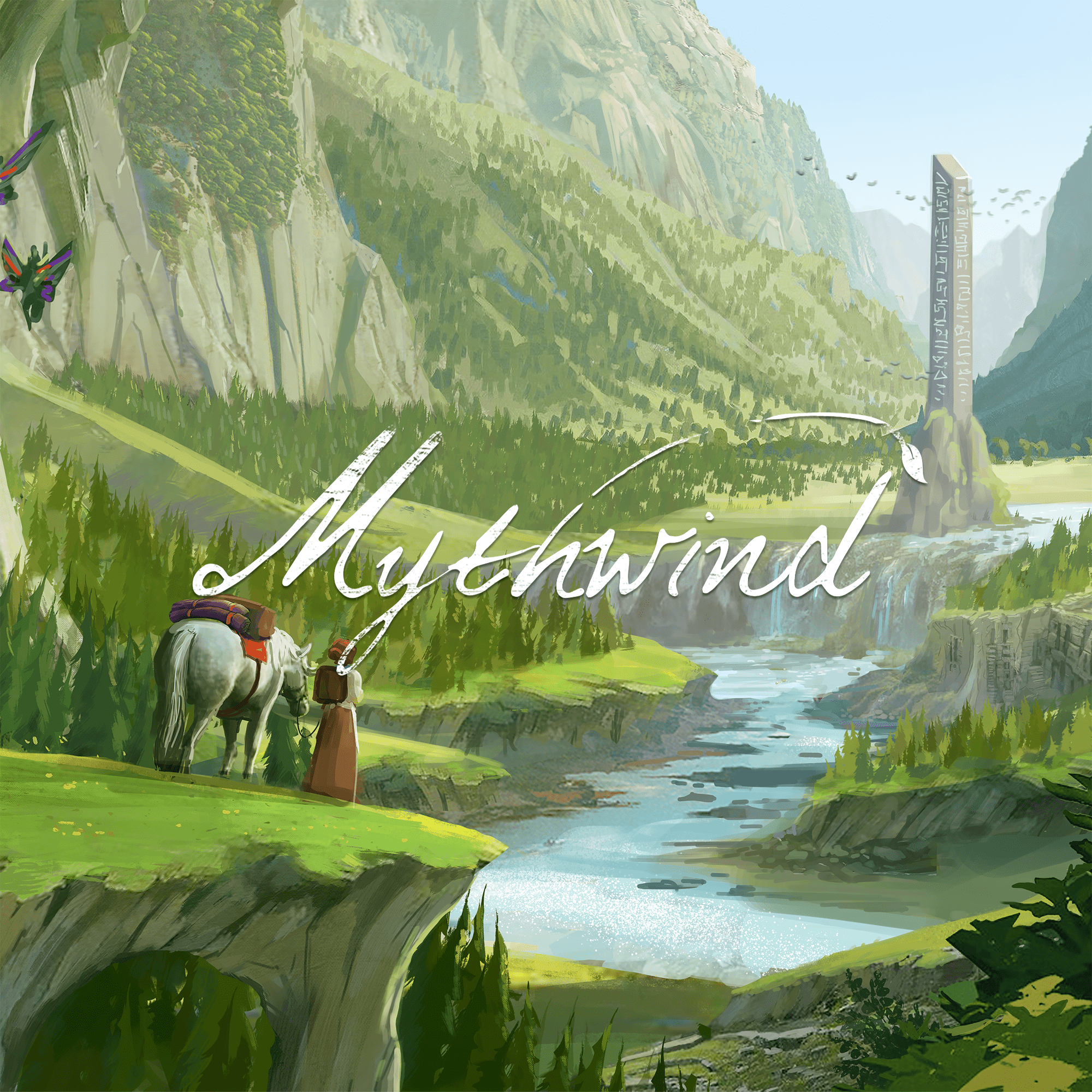
Mythwind is a cooperative & solo "cozy" board game with unique characters, magical sprites, engaging story and an unending adventure. During the game, the characters are working together to establish and build a new town in the magical Mythwind Valley. They work to achieve various goals by constructing buildings within the town, adventuring throughout the region, navigating relationships with the mysterious sprites who inhabit the valley, and developing their character-specific professions. As an open-ended game, Mythwind has no distinct conclusion. Although many players may find a natural end point to their game at the conclusion of the story, players can continue to play the game for as long as they would like over as many game sessions as they wish. As players progress through the game, their town will develop and grow, reacting to changing seasons and to the members of the community over time. Progress made can be easily saved using the provided game trays, which offer a quick and easy solution for both tear-down of the current game and setup of future games.

Qué sensaciones ofrece

Worker Placement with Dice Workers Cooperative Game Tech Trees / Tech Tracks Variable Player Powers Worker Placement Role Playing Solo / Solitaire Game Storytelling Scenario / Mission / Campaign Game Farming City Building Fantasy Civilization Adventure Mythology

Explora estas mecánicas en Cardboard

Crea un prototipo original con patrones de diseño reutilizables, no con el contenido de este juego.

Abrir el taller de mecánicas

Inteligencia del juego

Aprende el juego

100% de cobertura de conocimiento

Preparación

Each player selects a character (Farmer, Crafter, Ranger, Merchant, or Innkeeper) and takes their corresponding character board, components, and starting resources as described in each character's setup section. The Crafter's setup includes a Step 2 for assigning new starting values (pg 5 of the Crafter rulebook). The Town Charter board is placed in the center of the play area. Weather cards and other shared decks are shuffled and placed in their designated spaces. Each character sets up their unique play area according to their individual rulebook chapter before the first season begins.

Flujo del turno

The game is played in seasonal rounds, each consisting of multiple phases. A typical season begins with a Dawn phase (e.g., the Innkeeper resolves a Weather Card, makes Party Preparations, and Welcomes Guests). Players then take their Character Actions in turn or simultaneously depending on the variant being played. Each character has a unique action menu — for example, the Farmer manages Livestock and Equipment, the Crafter Sells and Refines Materials, the Ranger conducts Explorations, the Merchant Conducts Business (Selling, Manufacturing, or following Trends), and the Innkeeper Pampers guests, Improves facilities, Mingles, and hosts Parties. The season closes with a Dusk phase (e.g., the Innkeeper Seats and Hosts Guests) and an End of Season phase in which all characters perform upkeep, the Town Charter resolves effects such as Regrow Forest, the Farmer addresses Overgrowth, and the Innkeeper handles Accommodation Damage.

Puntuación y victoria

Cooperative — players win or lose together based on shared Town Charter goals and individual character objectives completed across seasons. Fuentes de puntuación: Guest Satisfaction (Innkeeper), Livestock sales (Farmer), Crafted goods sales (Crafter), Merchant business profits, Ranger expedition rewards, Town Charter seasonal goals

Fuente: Rulebook

Reglas que debes conocer

Las reglas más útiles para jugar bien la primera partida.

Special

At End of Season, the Town Charter triggers a Regrow Forest step.

During the End of Season phase, the Town Charter board resolves a Regrow Forest effect (Town Charter rulebook pg 31). This represents the natural replenishment of woodland resources in Mythwind and may affect resource availability or board state for subsequent seasons. Players should resolve this step as part of the shared End of Season sequence before beginning the next season.

Trading

The Farmer can Sell livestock as a Character Action.

As one of their Character Actions, the Farmer may Sell livestock (Farmer rulebook pg 22). This action allows the Farmer to convert livestock into currency or other resources. The specific sell values and conditions are detailed on pg 22 of the Farmer rulebook. This is distinct from other sell actions available to other characters.

Movement

The Farmer can Move equipment as a Character Action.

As one of their Character Actions, the Farmer may Move equipment (Farmer rulebook pg 24). This action governs how the Farmer relocates or repositions equipment on their farm board or the shared board. Refer to pg 24 of the Farmer rulebook for movement rules, costs, and restrictions.

Special

At End of Season, the Farmer must resolve Overgrowth on their farm.

During the End of Season phase, the Farmer resolves an Overgrowth step (Farmer rulebook pg 29). Overgrowth represents unchecked plant or crop growth that may penalize the Farmer or alter their farm board if not managed. This step is resolved as part of the End of Season sequence. Refer to pg 29 of the Farmer rulebook for specific Overgrowth consequences and resolution steps.

Setup

During Crafter setup, Step 2 assigns new starting values to the Crafter's components.

During the Crafter's setup phase, Step 2 involves assigning new starting values to the Crafter's workshop components and resources (Crafter rulebook pg 5). Players must follow this step carefully, as starting values affect the Crafter's initial production capacity and material availability at the beginning of the game.

Trading

The Crafter can Sell goods as a Character Action.

As one of their Character Actions, the Crafter may Sell crafted goods (Crafter rulebook pg 14). This sell action is distinct from the Workshop Sell action and is taken from the Crafter's personal action menu. Details on what can be sold and at what value are found on pg 14 of the Crafter rulebook.

Resource management

The Crafter can Refine Materials as part of their actions.

The Crafter has the ability to Refine Materials (Crafter rulebook pg 16), converting raw or basic resources into higher-quality materials used for crafting. The specific inputs, outputs, and costs of refinement are detailed on pg 16 of the Crafter rulebook. Refining is a core engine-building action for the Crafter's production chain.

Special

At End of Season, the Crafter performs Character Upkeep.

During the End of Season phase, the Crafter must perform Character Upkeep (Crafter rulebook pg 21). This step covers maintenance costs, resource adjustments, or other recurring obligations the Crafter must fulfill to keep their workshop operational between seasons. Failure to complete upkeep may result in penalties.

Informe estratégico

Crafter: Plan both Sell actions strategically

The Crafter has access to two distinct Sell actions — one as a Character Action (pg 14) and one as a Workshop Action (pg 22). Maximizing income requires understanding what each action sells and whether both can be used in a given season. Prioritize Refining Materials (pg 16) early to ensure high-value goods are ready for both sell windows.

Innkeeper: Repair proactively to avoid End of Season penalties

Accommodation Damage is assessed at End of Season (pg 30). Since the Repair action is only available during the season as part of the Improve action (pg 20), failing to Repair during the season means absorbing full damage penalties at upkeep. Prioritize Repair actions mid-season to minimize compounding degradation.

Innkeeper: Match guest Style Requirements before Seating

Guest Style Requirements (pg 11) directly affect satisfaction, and satisfaction is determined in part by how guests are Seated during Dusk (pg 26). Preparing the inn's style attributes during the season — via Pamper (pg 17), Mingle (pg 22), or Improve (pg 20) — before Dusk seating ensures Style Requirements are met and satisfaction is maximized.

Farmer: Manage Overgrowth by balancing livestock and equipment use

Overgrowth is resolved at End of Season (pg 29), suggesting that unchecked farm activity or inactivity can lead to overgrowth penalties. Actively using the Livestock Sell action (pg 22) to reduce stock and the Equipment Move action (pg 24) to manage the farm during the season can help mitigate Overgrowth at season's end.

Town Charter: Coordinate around Regrow Forest timing

The Town Charter's Regrow Forest step (pg 31) occurs at End of Season and replenishes woodland resources. Characters who depend on forest resources (likely the Ranger and Farmer) should plan their resource consumption with this replenishment in mind, spending down forest stocks before End of Season to benefit fully from regrowth.

Ranger: Complete Expeditions efficiently for maximum rewards

The Ranger's Expedition Completed step (pg 27) triggers when an exploration ends, delivering rewards based on what was discovered. Planning expeditions to conclude cleanly rather than abandoning them mid-season ensures the Expedition Completed resolution fires and the Ranger contributes meaningfully to the town's resources each season.

Preguntas frecuentes y casos límite

The Crafter has two different Sell actions — one as a Character Action (pg 14) and one as a Workshop Action (pg 22). Can the Crafter use both in the same turn, and do they sell different things?

These are two distinct Sell actions available to the Crafter. The Character Action Sell (pg 14) and the Workshop Action Sell (pg 22) are separate actions with potentially different available goods, values, or conditions. Whether both can be used in the same season depends on the Crafter's available action points. Consult each respective page for what each sell action covers and any limitations.

The Innkeeper did not use the Repair action during the season. What happens at End of Season when Accommodation Damage is resolved?

If the Innkeeper did not Repair damaged accommodations during the season (via the Improve > Repair action, pg 20), all unrepaired damage is assessed during the End of Season Character Upkeep Accommodation Damage step (pg 30). This likely results in penalties such as reduced accommodation capacity, quality degradation, or resource losses going into the next season.

Does a guest's Style Requirement affect how they are seated during Dusk?

Yes. Guest Style Requirements (pg 11) are relevant not only to general Guest Satisfaction but also to how guests are Seated during the Dusk Host Guests phase (pg 26). Seating a guest in an accommodation or seat that does not match their Style Requirement may result in reduced or no satisfaction for that guest.

In what order are End of Season steps resolved when multiple characters have upkeep steps?

Each character resolves their own End of Season steps: the Town Charter resolves Regrow Forest (Town Charter pg 31), the Farmer resolves Overgrowth (Farmer pg 29), the Crafter performs Character Upkeep (Crafter pg 21), and the Innkeeper resolves Accommodation Damage as part of Character Upkeep (Innkeeper pg 30). Consult the Town Charter rulebook for the definitive ordering of shared vs. individual upkeep steps.

What is the exact order of steps the Innkeeper takes during the Dawn phase?

During Phase 1 (Dawn), the Innkeeper must: (1) Resolve 1 Weather Card, then (2) make Party Preparations (pg 14), then (3) Welcome Guests (pg 15). These steps occur in this order at the start of the season before Character Actions are taken.

During Conduct Business, can the Merchant choose both Manufacture and Trend in the same action, or must they pick one?

The Merchant's Conduct Business action offers Manufacture or Trend as options (Merchant rulebook pg 34–35). Whether these are mutually exclusive choices or can both be taken depends on the Merchant's available actions for the turn. Consult pg 34–35 of the Merchant rulebook for the specific rules governing this choice.

Pregunta Sobre Este Juego

Juegos similares