2005 Puesto n.º 13405 en BGG

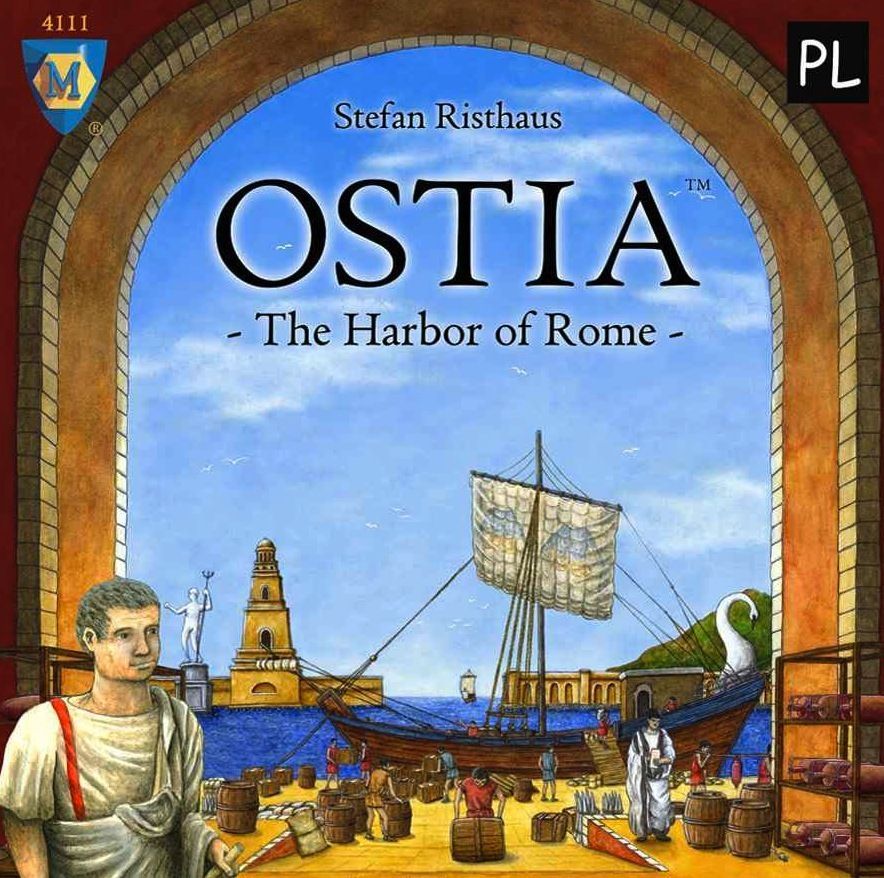
Ostia: The Harbor of Rome

3–5 jugadores 60 min A partir de 12 años 2.5/5 de complejidad 5.5/10 de valoración

Acerca de este juego

Ostia is an economic game of trading goods and donating them to the senate of Rome. You have to decide, whether you want to earn money for your goods or whether you want to donate some of them to the senate. The senate grants victory points for the most needed goods, but no money. Therefore you have to put some goods to the market, hoping that they are rarely sold there to earn enough money for the next trading phase. The ranking of goods mostly needed changes each round and you can see the ranking for the next round. Accordingly you may decide to keep some of the goods for next round, when they are more valuable to the senate. But you can keep only one card of goods per storehouse and storehouses are expensive.

Qué sensaciones ofrece

Trading Commodity Speculation Auction / Bidding Ancient Economic

Explora estas mecánicas en Cardboard

Crea un prototipo original con patrones de diseño reutilizables, no con el contenido de este juego.

Abrir el taller de mecánicas

Inteligencia del juego

Aprende el juego

100% de cobertura de conocimiento

Preparación

1. Place the game board centrally. 2. Separate Forum cards and Senate cards into their respective decks and place them face-down on their designated spaces. 3. Give each player a starting hand of Denars as specified by the rules. 4. Place goods tokens in a central supply. 5. Determine the starting player. The Branch Office phase will reveal goods to the board at the start of each round.

Flujo del turno

Each round proceeds through the following numbered phases in order: 1. HARBOUR – Goods are loaded onto the boat; players acquire and trade goods over two trading rounds. 2. BRANCH OFFICE – Goods are revealed and allocated to the board (Forum and/or Senate), with a restriction of only 3 types together in those civic spaces; Forum and Senate cards are then turned face-up. 3. SCORE FORUM CARDS – Players score points from their Forum cards. (Phase 4 is not described in the rulebook excerpt.) 5. BUILD WAREHOUSE – Players may build warehouses, sell goods, discard surplus, or change their Senate card. After all phases, the round ends. The game concludes with a Final Scoring of goods sets and money.

Puntuación y victoria

Player with the most points at the end of Final Scoring wins. Fuentes de puntuación: Forum card scoring (Phase 3, each round), Final Scoring: each type of goods held, Final Scoring: money (Denars) held

Fuente: Rulebook

Reglas que debes conocer

Las reglas más útiles para jugar bien la primera partida.

Turn structure

At the start of the Harbour phase, 5 goods are placed into the boat.

During Phase 1 (Harbour), step (a): 5 goods tokens are placed onto the left side of the boat board. These goods are now available for players to acquire and trade during this phase.

Resource management

Each player takes possession of one good from the boat (right side).

During Phase 1 (Harbour), step (b): Each player takes possession of one good from the right side of the boat, moving it into their personal property. This is a guaranteed acquisition before trading rounds begin.

Trading

There are 2 trading rounds in the Harbour phase; in each round every player makes one offer to sell 2 goods, starting with the left neighbour.

During Phase 1 (Harbour), step (c): Two trading rounds take place. In each trading round, players sell up to 2 goods. Every player makes exactly ONE offer per round. The left neighbour offers first, then play proceeds clockwise. Goods sold move from the boat to the buying player's property.

Trading

The left neighbour always makes the first offer in each trading round.

In each of the 2 Harbour trading rounds, the left neighbour of the active or starting player makes the first offer. Each player then makes one offer in clockwise order. This governs turn order for all trading within the Harbour phase.

Resource management

Goods acquired through trading move from the boat to the buyer's personal property.

When a player successfully purchases goods during a Harbour trading round, those goods are moved from the boat to that player's property (their personal supply). This completes the transfer of goods from the communal boat to individual ownership.

Turn structure

At the start of the Branch Office phase, 4 goods are revealed for 3 players, or 2 goods for 4 players.

During Phase 2 (Branch Office), step (a): The number of goods turned face-up depends on player count — 4 goods are revealed in a 3-player game, and 2 goods are revealed in a 4-player game. These revealed goods count toward the Forum phase.

Resource management

All revealed goods are allocated to the board simultaneously; only 3 types of goods are allowed together in the Forum and Senate combined.

During Phase 2 (Branch Office), step (b): All goods revealed in step (a) are allocated to the board at the same time (all at once). There is a strict restriction: only 3 different types of goods may be present together across the Forum and Senate spaces combined. Players must respect this limit when placing goods.

Restriction

No more than 3 types of goods may be present in the Forum and Senate combined at any time.

Across the Forum and Senate spaces combined, a maximum of 3 different types of goods are allowed at the same time. This restriction applies during the Branch Office allocation step and must be respected whenever goods are placed or remain in these civic spaces.

Informe estratégico

Trading Order Advantage

Because the left neighbour always offers first in each Harbour trading round, positioning matters. Being the first to offer means you can set the price for goods before others react, while offering last means you can assess all prior offers before committing.

3-Type Restriction as a Blocking Tool

Since only 3 types of goods may coexist in the Forum and Senate, controlling which types are allocated during Branch Office can lock opponents out of scoring certain Forum cards. Prioritise types that match your Forum cards to deny rivals their preferred goods.

Warehouse Timing and Funding

Warehouses cost 10 Denars but a single good sale provides 7. Plan to have at least 3 Denars on hand when selling a good so you can build a warehouse in the same phase without delay. Building early expands your storage, reducing future surplus discards.

Balancing Goods vs. Denars for Final Scoring

Both goods types and Denars contribute to Final Scoring. Avoid over-spending Denars on warehouses late in the game if the money itself scores points. Conversely, do not hoard Denars at the expense of diversifying goods types, since each type scores independently.

Senate Card Flexibility

The ability to change your Senate card during Phase 5 means you are not locked into a single Senate strategy. Evaluate the current goods distribution and upcoming rounds before deciding to swap, as the new card is revealed at the start of the next Branch Office phase.

Preguntas frecuentes y casos límite

What happens if the goods revealed in the Branch Office phase would create more than 3 types in the Forum and Senate combined?

Only 3 types of goods are allowed together in the Forum and Senate at the same time. If allocating the newly revealed goods would exceed 3 types, the allocation must be adjusted so that the 3-type limit is not breached. Excess types cannot be placed in those civic spaces.

Can a player make more than one offer per trading round in the Harbour phase?

No. Each player makes exactly ONE offer per trading round. With 2 trading rounds total, each player can make a maximum of 2 offers across the entire Harbour phase.

Can a player sell a good and use the proceeds to immediately build a warehouse in the same phase?

Yes. Both actions occur in Phase 5 (Build Warehouse). A player may sell one good for 7 Denars and use those Denars (combined with existing money) toward the 10-Denar cost of building a warehouse in the same phase.

Are Senate cards scored during Phase 3 alongside Forum cards?

No. Phase 3 scores Forum cards only. Senate cards are not scored in Phase 3. Senate cards are turned face-up at the end of Phase 2 and may be changed during Phase 5, but their scoring (if any) follows different rules.

How many goods are revealed in the Branch Office phase depending on player count?

In a 3-player game, 4 goods are turned up. In a 4-player game, only 2 goods are turned up. The lower number for more players keeps competition for goods tight.

Pregunta Sobre Este Juego

Juegos similares