1997 Puesto n.º 9076 en BGG

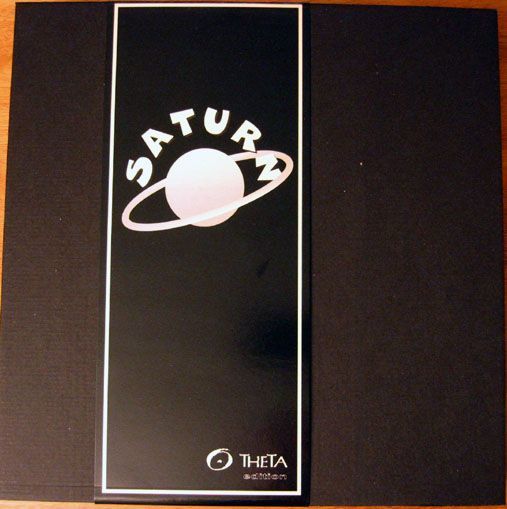
Saturn

2–4 jugadores 30 min A partir de 8 años 1.3/5 de complejidad 5.6/10 de valoración

Acerca de este juego

Players take turns placing various sized wooden balls on the carefully balanced structure that resembles the rings of Saturn. Players must attempt to place their balls on the rings without making the ring touch the table. Higher points are scored if balls are placed on the outer ring. Also heavier balls score higher as well.

Qué sensaciones ofrece

Action / Dexterity

Inteligencia del juego

Aprende el juego

100% de cobertura de conocimiento

Preparación

1. Place the hemisphere in the center of the table.\n2. Adjust the three rings (small, medium, large) onto their respective rests as horizontally as possible.\n3. Each player takes one complete set of colored balls. Each set contains three balls of different sizes (and therefore different weights): small (1 point), medium (2 points), and large (3 points).\n4. Players decide who goes first.

Flujo del turno

On their turn, a player selects one of their remaining balls and places it into a drill hole on one of the three rings. A brief, momentary touch of a ring on the table is permitted during placement. If the placement is valid (no ring permanently touches the table afterward), the ball stays in place and play passes to the next player. If a ring permanently touches the table, the placement is invalid: the player takes their ball back and may use it again on a future turn. Play continues clockwise until a player has placed all their balls, or no player is able to make a valid placement.

Puntuación y victoria

Each player sums the scores of all their successfully placed balls (ball weight × ring point value). The player with the highest total score wins. Fuentes de puntuación: Ball weight × ring point value for each successfully placed ball (small ball=1, medium ball=2, large ball=3; small ring=1, medium ring=2, large ring=3)

Fuente: Rulebook

Reglas que debes conocer

Las reglas más útiles para jugar bien la primera partida.

Setup

Place the hemisphere in the center of the table as the game's base.

The hemisphere is placed in the middle of the table at the start of the game. It serves as the central base that supports the ring structure.

Setup

Adjust the three rings onto their rests as horizontally as possible.

There are three rings of different sizes — small, medium, and large — each with drill holes for placing balls. Before play begins, all three rings must be adjusted to their respective rests and made as horizontal as possible.

Setup

Each player takes one set of colored balls containing three balls of different sizes.

Each player receives one set of colored balls. Each set contains three balls in three different sizes, which also correspond to three different weights: small (weight/point value 1), medium (weight/point value 2), and large (weight/point value 3).

Turn structure

On your turn, place one of your remaining balls into a drill hole on any ring.

On your turn you choose one of your remaining balls and carefully place it into a drill hole on one of the three rings (small, medium, or large). A brief, momentary contact of a ring with the table is allowed while you are placing the ball. After placing, if no ring permanently touches the table, the placement is valid and play passes to the next player.

Restriction

A placement is valid only if no ring permanently touches the table after the ball is placed.

A placement is considered valid if, once the player has placed their ball, no ring remains in permanent contact with the table. A momentary, brief touch during the act of placing is allowed. If the placement is valid, the ball stays in its hole and it is the next player's turn.

Restriction

If a ring permanently touches the table after placement, the ball must be taken back.

If one or more rings touch the table permanently as a result of a player's placement, that placement is not valid. The player must remove their ball from the ring. The retrieved ball is returned to the player's supply and may be used again on a future turn.

Scoring

A ball's score equals its weight multiplied by the point value of the ring it is placed on.

Each ball placement earns points equal to the ball's weight multiplied by the point value of the ring it occupies. Ring point values: small ring = 1 point, medium ring = 2 points, large ring = 3 points. Ball weight values: small ball = 1 point, medium ball = 2 points, large ball = 3 points. Examples: weight-3 ball on small ring = 3×1 = 3 points; weight-1 ball on medium ring = 1×2 = 2 points; weight-2 ball on large ring = 2×3 = 6 points.

Scoring

A player's total score is the sum of all their valid placements' scores.

At the end of the game, each player's score is calculated by summing the individual scores (ball weight × ring value) of every ball they successfully placed on the rings. Balls that were never successfully placed do not count toward any player's score.

Informe estratégico

Maximize score with high-value pairings early

Since scores multiply ball weight by ring value, the large ball on the large ring yields 9 points — the maximum for a single placement. Attempting these high-value pairings early, when the rings are less loaded and more stable, increases the chance of a valid placement.

Use heavy balls strategically, not recklessly

Heavy balls score more points but also add more weight to the rings, increasing the risk of tipping a ring permanently onto the table (invalid placement). Weigh the point gain of a heavy ball on a high-value ring against the risk of destabilizing the structure and losing the turn entirely.

Save lighter balls for a crowded structure

As more balls are placed, the rings become less stable. Light balls (weight 1) add the least risk of causing a ring to permanently touch the table, making them better candidates for later in the game when the structure is precarious. However, they also score the fewest points, so saving them too long may leave you with only low-scoring options.

Aim to place all balls

Unplaced balls score zero points. Triggering the game end by placing all your balls also stops opponents from scoring further. Efficiently placing all three balls — even if some are on lower-value rings — will often outscore leaving powerful balls unplaced.

Balance ring loading to avoid collapse

The rings must remain horizontal and off the table to be valid. Concentrating too many balls on one side or one ring may cause a permanent tilt. Distributing weight across rings and holes can extend the game and preserve scoring opportunities.

Preguntas frecuentes y casos límite

A ring briefly touches the table while I'm placing a ball, but then lifts back up. Is my placement valid?

Yes, the placement is valid. The rules explicitly allow a momentary, brief touch of the rings on the table during the act of placing a ball. Only a permanent (sustained) contact with the table after placement makes it invalid.

My placement was invalid and I had to take my ball back. Can I use that ball again later?

Yes. When a placement is invalid, the player takes their ball back and is explicitly allowed to use it again on a future turn. It returns to their available supply.

The game ended because one player placed all their balls, but I still have balls left. Do my remaining balls count?

No. Balls that were not successfully placed on the rings by game end do not count toward any player's score, regardless of the reason the game ended.

Does it matter which ball I put on which ring?

Yes, significantly. Scores are calculated by multiplying ball weight by ring value. The maximum single score is 9 points (heavy ball, weight 3, on the large ring, value 3: 3×3=9). Pairing heavy balls with high-value rings yields the most points, but heavier balls may also destabilize the structure, risking an invalid placement.

None of us can place a ball without a ring permanently touching the table. What happens?

The game ends immediately. No player needs to attempt further placements. Scoring proceeds with only the balls already successfully placed on the rings counting toward each player's total.

Pregunta Sobre Este Juego

Juegos similares