1992 Puesto n.º 222 en BGG

Modern Art

3–5 jugadores 45 min A partir de 10 años 2.3/5 de complejidad 7.3/10 de valoración

Acerca de este juego

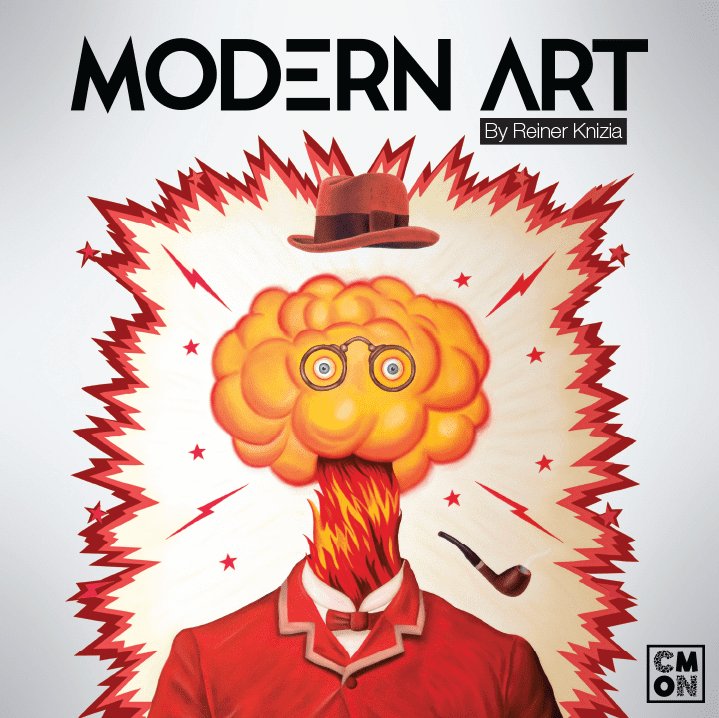
Buying and selling paintings can be a very lucrative business. Five different artists have produced a bunch of paintings, and it's the player's task to be both the buyer and the seller, hopefully making a profit in both roles. He does this by putting a painting from his hand up for auction each turn. He gets the money if some other player buys it, but must pay the bank if he buys it for himself. After each round, paintings are valued by the number of paintings of that type that were sold. The broker with the most cash after four rounds is the winner. Part of the Knizia auction trilogy.

Qué sensaciones ofrece

Commodity Speculation Auction: English Auction: Turn Order Until Pass Auction / Bidding Victory Points as a Resource Auction: Sealed Bid Hand Management Auction: Once Around Card Game Economic Art Fine Art and Art Museums Painting / Paintings Mail / Stamps / The Post Office

Explora estas mecánicas en Cardboard

Crea un prototipo original con patrones de diseño reutilizables, no con el contenido de este juego.

Abrir el taller de mecánicas

Inteligencia del juego

Aprende el juego

100% de cobertura de conocimiento

Preparación

1. Place the value tracking board in the center of the table. 2. Separate the 70 artwork cards by artist. Shuffle all cards together and deal an opening hand to each player (number depends on player count). 3. Give each player a bidding screen to hide their coins. 4. Distribute starting coins to each player from the bank. 5. Place the 12 value chips and remaining coins near the board. 6. The player who most recently visited an art museum goes first, or determine randomly.

Flujo del turno

On your turn, you are the Auctioneer. You must play one card from your hand face-up onto the table and conduct an auction for it using the auction type shown on the card. The five auction types are: Free Auction (open bidding), Single Offer (one bid each in turn order, auctioneer bids last), Blind Bid (simultaneous sealed bids), Fixed Price (auctioneer sets price, offered to each player in turn), and Joint Offer (requires pairing with a second card of the same artist). After the auction resolves, the player to the auctioneer's left becomes the new auctioneer. A round ends immediately when five or more cards from a single artist have been played. After a round ends, settling up occurs: cards are valued, players sell their purchased paintings for cash, then value chips remain cumulatively on the board for subsequent rounds.

Puntuación y victoria

The player with the most cash at the end of four rounds wins. Fuentes de puntuación: Cash received from selling cards to other players at auction (as Auctioneer), Cash received from selling purchased paintings to the bank during settling up (based on cumulative artist value chips), Free card acquisition (Joint Offer returned, No-Bid auction)

Fuente: Rulebook

Reglas que debes conocer

Las reglas más útiles para jugar bien la primera partida.

General

The player with the most cash after four rounds wins.

Modern Art is played over four rounds. Players act as art brokers, auctioning paintings from their hands and bidding on others. After each round, paintings are valued based on how many of each artist's works were sold. The broker holding the most cash at the end of four rounds is the winner.

Turn structure

A round ends immediately when five or more cards from a single artist are on the table.

A round ends the moment the fifth card from any one artist is played onto the table. This includes all cards played during the round, including the card that triggered the end. Once five cards from one artist are on the table, no more auctions are conducted for that round — settling up begins immediately.

Turn structure

On your turn as Auctioneer, play one card from your hand and conduct its auction.

The active player is called the Auctioneer. They must play one card from their hand face-up on the table and conduct an auction for it according to the auction type symbol printed on the card. After the auction is resolved, the role of Auctioneer passes to the player on the current Auctioneer's left.

Special

Free Auction: all players bid freely with no turn order; highest bid wins.

In a Free Auction, all players (including the Auctioneer) may bid. There is no set order of bidding, and players may raise their bids as they wish. The painting goes to the highest bidder. If the Auctioneer wins, they pay the bank. If another player wins, they pay the Auctioneer.

Special

Single Offer: each player makes one bid in turn, starting left of Auctioneer; Auctioneer bids last.

In a Single Offer auction, each player in turn, starting with the player to the Auctioneer's left, makes exactly one bid. The auction continues around the table and ends with the Auctioneer, who has the last bid. The highest bid wins. The Auctioneer may outbid all others on their final turn. Payment follows the same rules: winner pays Auctioneer, or pays bank if Auctioneer wins.

Special

Blind Bid: all players simultaneously reveal hidden bids; highest bid wins.

In a Blind Bid auction, each player secretly picks up coins equal to the amount they wish to bid. All players hold their closed fist over the card simultaneously. When all are ready, they open their hands and reveal their bids at the same time. The highest revealed bid wins the painting. Payment follows standard rules: winner pays Auctioneer or bank if Auctioneer wins.

Special

Fixed Price: Auctioneer sets a price; each other player accepts or declines in turn; Auctioneer must buy at that price if all decline.

In a Fixed Price auction, the Auctioneer sets a price for the card. Each other player in turn is offered the card at that price and may accept or decline. The first player to accept buys the card and pays the Auctioneer. If all other players decline, the Auctioneer must buy the card themselves by paying that amount to the bank. Important restriction: the Auctioneer may not set a price higher than their current cash holdings.

Special

Joint Offer: requires pairing with a second card of the same artist; auction type is determined by the second card.

A Joint Offer card must be paired with a second card of the same artist but with a different auction symbol. The player who played the Joint Offer card has the first opportunity to add a second card from their hand. If they cannot or choose not to, each other player in turn to the left may add a second card. The player who adds the second card auctions both cards as a single lot using the auction type on the second card, and collects all proceeds from the sale. Players who did not add a card effectively lose their turn. If no player can or wants to add a second card, the original Joint Offer card is returned to the player who played it, placed face-up in front of them at no cost. The player whose turn follows is then the one to the left of the original player (not the one who added the second card).

Informe estratégico

Bidding ceiling awareness

Never pay more for a card than its maximum possible value. In round 1, the ceiling is 300,000. Paying 220,000 is only profitable if that artist finishes first. If they finish second (200,000) or lower, the buyer takes a loss. Always weigh the purchase price against the probability of the artist placing well.

Cumulative value exploitation

Artists who placed well in earlier rounds carry forward value chips, making their cards potentially worth 500,000 or more in later rounds. Prioritize buying cards from artists with existing chips on the board in rounds 2–4, but only if you believe they will also place in the top three again.

Joint Offer timing

Playing a Joint Offer card gives up control: another player will likely add the second card and collect all proceeds. Use Joint Offer strategically to force an artist you want to push toward the 5-card limit, potentially denying opponents the benefit of an auction, or to 'test the market' at low cost when you cannot or do not want to add the second card yourself.

Controlling round-end timing

Because a round ends when any artist hits 5 cards, players can strategically accelerate or delay the round end. Playing cards of an artist close to 5 forces opponents to act cautiously, while avoiding certain artists can keep the round going for more auctions.

Fixed Price as market control

In a Fixed Price auction, setting a price too high risks being forced to buy the card yourself (paying the bank). Setting it low means quick cash but potentially undervaluing your card. Balance between a price others will accept and one you can afford if forced to buy.

Valueless card disposal

Cards from artists who finish 4th or 5th in a round are worth nothing during settling up. Avoid hoarding cards from artists unlikely to place in the top three. If you hold many cards from a weak artist, consider playing them as the Auctioneer to extract cash from other players rather than hoping for payout value.

Preguntas frecuentes y casos límite

A Joint Offer card is played and the second card added brings an artist to exactly 5 cards on the table. Are the cards auctioned?

No. The round ends immediately when the 5th card of any artist is placed on the table. The two Joint Offer cards are not auctioned and not sold. They count toward the artist's total for round-end valuation, but neither player receives any proceeds from an auction.

An Auctioneer sets a Fixed Price and all other players decline. What happens?

The Auctioneer is obligated to buy the card at the price they set, paying that amount to the bank. They cannot set a price higher than their current cash, so they are always able to complete the purchase.

A Joint Offer card is played but no player (including the original player) can or wants to add a second card. What happens?

The original player takes the card back and places it face-up in front of them at no cost. It is not auctioned and counts as being in their collection. Play then passes to the player to the left of the original player.

An artist had a value chip from round 1 but does not place in the top three in round 2. What is their card value for round 2 payout?

Zero. An artist must place in the top three of the current round to have any value during that round's settling up. Prior chips on the board do not grant any value if the artist does not rank in the current round.

The card played to trigger the end of a round (the 5th card of an artist) — is it sold during settling up?

Yes it is counted toward the artist's total and does affect valuation, but in the early game end scenario (all players exhaust cards), the last card is explicitly not sold. In a normal round-ending scenario, the card that triggers the end is counted in totals and its owner can sell it during settling up if it has value.

Player A plays a Joint Offer. Player B (to A's left) adds the second card and conducts the auction. Whose turn is next after the auction?

Play continues with the player to the left of Player A (i.e., Player B), not the player to the left of Player B. Players who did not add a card effectively lose their turn in the rotation for that auction.

Can the Auctioneer buy their own painting in a Free Auction or Blind Bid? Who do they pay?

Yes. The Auctioneer may bid and win their own card in a Free Auction or Blind Bid. However, they pay the bank rather than themselves. This means buying your own card costs you cash with no corresponding income.

Pregunta Sobre Este Juego

Juegos similares