Setup
Remove cards based on player count before shuffling and dealing.
Before each deal, cards are filtered by player count. With 3 players, only cards valued 1–9 are used (45 cards). With 4 players, only cards valued 1–12 are used (60 cards). With 5 players, only cards valued 1–15 are used (75 cards). With 6 players, all cards are used. Cards not required are set aside and play no part in the deal.
Setup
Shuffle remaining cards and deal 15 to each player.
After removing the appropriate cards for the player count, the remaining deck is shuffled and dealt evenly to all players. Every player receives exactly 15 cards, which they hold in their hand.
General
The full game consists of as many deals as there are players.
After each complete deal of 15 tricks, scores are recorded and a new deal begins. The total number of deals played equals the number of players participating. After all deals are complete, the player with the highest cumulative score wins.
Turn structure
The starting player may play any card to lead a trick.
The player leading a trick chooses any card from their hand and plays it face-up in front of themselves on the table. The color of that card establishes the lead color that all other players must follow if they can.
Turn structure
Players must follow the lead color if they are able to.
After the lead card is played, each other player in clockwise order must play a card of the same color as the lead card if they have one. A player who cannot follow the lead color may play any card from their hand. There is no requirement to play any particular color when unable to follow suit.
Turn structure
The highest card is the one with the numerically highest value, regardless of color; ties go to the last played.
After all players have played a card, the highest card is identified. The highest card is always the card with the numerically highest value, completely independent of color. If two or more players have played cards with the same highest number, the one that was played last (i.e., latest in clockwise order) is considered the highest.
Turn structure
The lowest card is the one with the numerically lowest value, regardless of color; ties go to the last played.
After all players have played a card, the lowest card is identified. The lowest card is always the card with the numerically lowest value, completely independent of color. If two or more players have played cards with the same lowest number, the one that was played last (i.e., latest in clockwise order) is considered the lowest.
Special
The player with the lowest card wins the single highest card as profit.
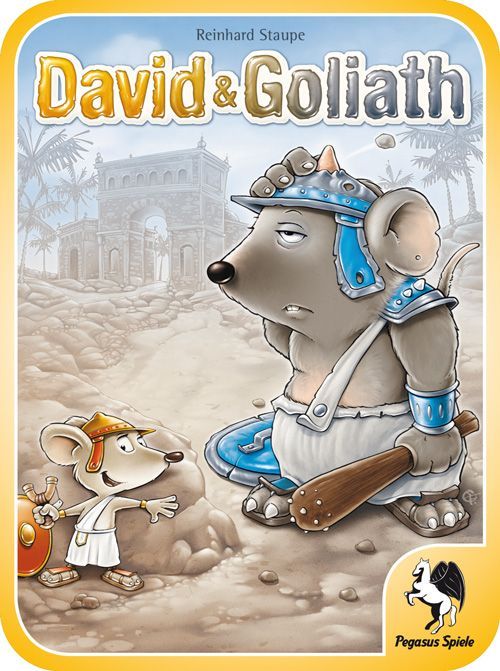
The player whose card is determined to be the lowest receives only the highest card played in that trick as their profit. They place this single card face-up beside them on the table. This is the 'David' mechanic — the weakest play captures the most powerful card.