2019 BGG rank #23403

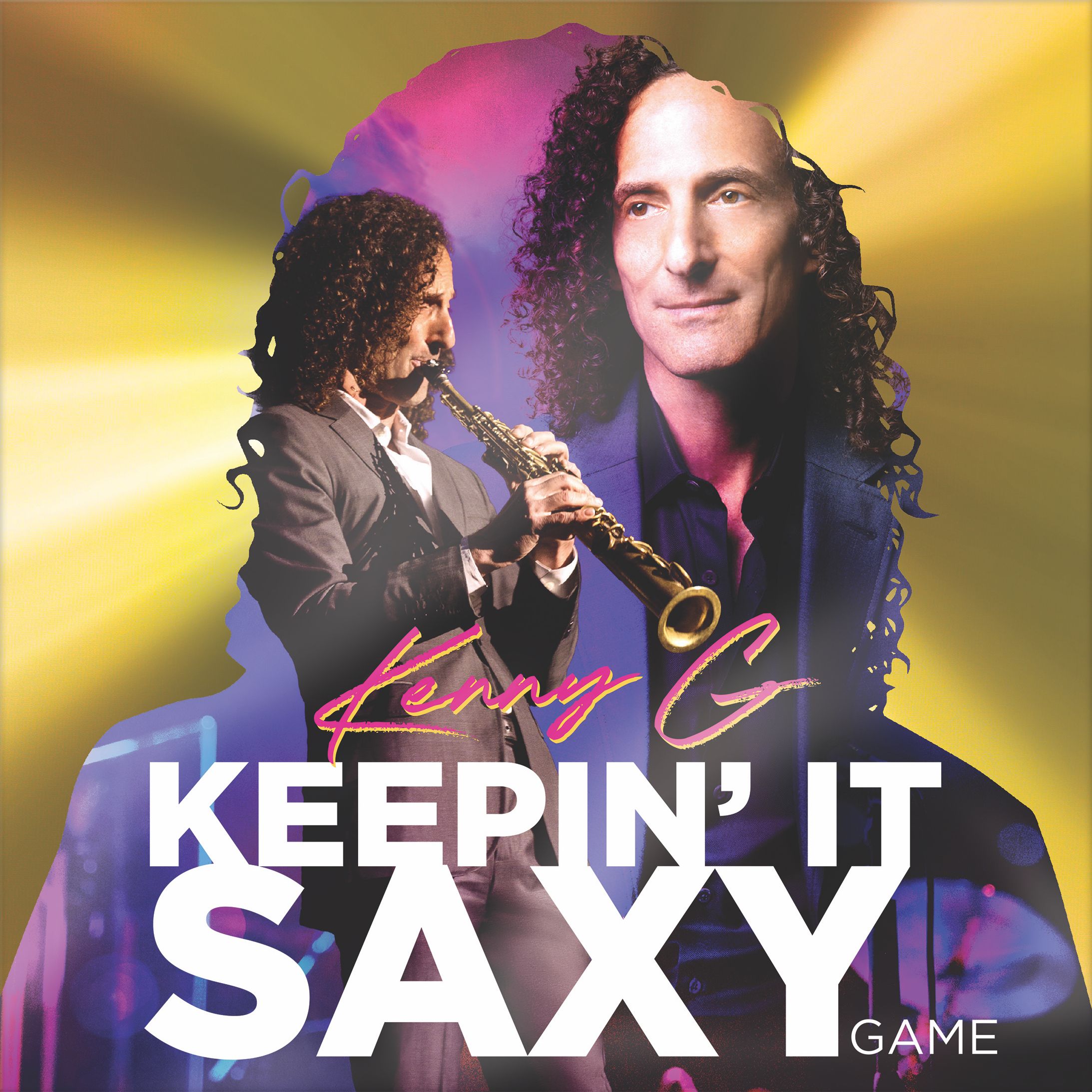
Kenny G: Keepin' It Saxy Game

2–5 players 30 min Ages 12+ 1.7/5 complexity 5.5/10 rating

About this game

Players work together and use the power of jazz to keep Kenny G in the groove. Help Kenny G stay in the groove with the power of jazz! In this cooperative game, players work together to make sure Kenny stays smooth and saxy through a hectic day. During each round, players will play sound cards to help Kenny overcome uncool events, detangle his luscious locks, and avoid rush hour traffic without missing a brassy beat. No jazz playing in the elevator? Scat with your friends and a “Biddle Scoodily Bop” can get Kenny back in the groove and keeping it smooth and saxy. —description from the publisher

What it feels like

Cooperative Game Hand Management Card Game Music

Explore these mechanics in Cardboard

Start an original prototype from reusable design patterns—not this game's content.

Open mechanics workbench

Game intelligence

Learn the game

100% knowledge coverage

Setup

1. Unfold the game board and place it on the table, ensuring the correct side is face-up based on player count (the board is double-sided for different player counts). 2. Place 12 Groove Tokens in a pool on the bottom of the game board. Set the remaining 4 Groove Tokens nearby as reserves. 3. Separate the Event Cards into three decks: Morning, Afternoon, and Evening. Shuffle each deck separately and place them face down above the game board. 4. Shuffle all Sax Cards together and deal four to each player. Players keep their cards face up in front of them so all players can see them. Place the remaining Sax Cards face down as the Sax Deck. 5. Place the Kenny G Mover on the first Morning space of the game board. 6. Place the three Dice near the game board. 7. Give the First Player Marker (Saxophone) to the player who most recently played a musical instrument.

Turn flow

The game is played over six rounds: two Morning, two Afternoon, and two Evening. Each round has three phases in order: PHASE 1 — EVENT PHASE: Reveal Event Cards (the number is indicated on Kenny G's current board space based on player count) and place them face up in a row below the game board, leaving space beneath each for Sax Cards to be played. PHASE 2 — SAX PHASE: Starting with the First Player Marker holder and going clockwise, each player takes a turn. On your turn, you may take three actions in any order and combination: (a) Play a Sound Card to an Event, (b) Play an Ability Card, (c) Draw two cards from the Sax Deck, or (d) Trade one card with another player. Actions may repeat. Players are encouraged to discuss strategy openly. PHASE 3 — GROOVE PHASE: After all players have taken one turn, resolve incomplete Events. For each incomplete Event, roll the number of dice shown on that card (1, 2, or 3) and remove that many Groove Tokens from the board. If any Event's symbol modifies the roll, apply it. If all Groove Tokens are removed, players lose immediately. Completed Events are discarded; incomplete Events remain for the next round. END OF ROUND: Move the Kenny G Mover to the next board space. Pass the First Player Marker left. Incomplete Event Cards stay in play. Begin the next round.

Scoring and victory

Cooperative win/loss: all players win together or lose together. Winners are rated by Groove Tokens remaining. Target score: At least 1 Groove Token remaining after the final (sixth) round Scoring sources: Groove Tokens remaining on the board at end of game

Source: Rulebook

Rules to know

The most useful rules for getting a first game right.

General

All players win or lose together — this is a fully cooperative game.

Kenny G: Keepin' It Saxy is a fully cooperative game. All players share a single win or loss outcome. There is no individual winner. Players win together if at least one Groove Token remains on the game board at the end of the sixth and final round.

Endgame

Players win if at least one Groove Token remains on the board after the final (sixth) round.

Players collectively win the game if, after completing all six rounds (two Morning, two Afternoon, two Evening) including the final Groove Phase, there is at least one Groove Token still on the game board. The number of remaining tokens determines the performance rating.

Endgame

Players immediately lose if the last Groove Token is removed from the board.

If at any point during the Groove Phase all Groove Tokens are removed from the game board, Kenny G has lost his groove and all players immediately lose the game. The game ends at that moment; remaining rounds are not played.

Turn structure

The game lasts exactly six rounds: two Morning, two Afternoon, two Evening.

The game is played over exactly six rounds. The rounds proceed in order: Morning 1, Morning 2, Afternoon 1, Afternoon 2, Evening 1, Evening 2. The Kenny G Mover advances one space on the board after each round. Each round consists of three sequential phases: Event Phase, Sax Phase, and Groove Phase.

Turn structure

At the start of each round, reveal Event Cards equal to the number indicated on Kenny G's current board space.

During the Event Phase (Phase 1 of each round), look at Kenny G's current space on the game board. That space indicates how many Event Cards to reveal (based on the number of players). Draw that many cards from the appropriate time-of-day Event deck (Morning, Afternoon, or Evening) and place them face up in a row below the game board. Leave space below each card for Sound Cards to be played onto it. Previously incomplete Event Cards from prior rounds remain in play alongside the new ones.

General

Each Event Card has a riff (sequence of Sounds) that must be completed in order, and either a benefit or penalty symbol.

Each Event Card represents a challenge Kenny G must overcome with jazz. It contains: (1) a 'riff' — a specific sequence of Sound colors/types that must be matched in exact left-to-right order using Sound Cards; (2) a dice number (1, 2, or 3) indicating how many dice to roll if the event is incomplete at the Groove Phase; and (3) either a star/benefit symbol (provides a reward when completed) or a penalty symbol (applies an effect during the Groove Phase dice roll if incomplete).

Turn structure

During the Sax Phase, players take turns clockwise starting with the First Player Marker holder; each player takes three actions.

The Sax Phase (Phase 2) begins with the player holding the First Player Marker and proceeds clockwise. On your turn, you may take exactly three actions. The four possible actions are: (a) Play a Sound Card, (b) Play an Ability Card, (c) Draw two cards, (d) Trade one card with another player. You may use the same action type more than once and may take actions in any order. All players openly discuss strategies during this phase.

Card play

Play a Sound Card from your hand onto an Event Card, matching the next required Sound in that Event's riff.

As one of your three actions, you may play one Sound Card from your hand to any one active Event Card. The Sound on your card must exactly match the next unplayed Sound in that Event's riff (riffs must be completed in left-to-right order). Place the played Sound Card below the Event Card, adding from left to right. You may play multiple Sound Cards in a single turn (each costs one action) and may play to different Event Cards.

Strategy briefing

Prioritize High-Dice Events

Event Cards that show 3 dice are the most dangerous when left incomplete — they can drain up to 18 Groove Tokens in a single Groove Phase across two uncompleted 3-dice events. Focus cooperative card play on eliminating the highest dice-value Events first each round.

Leverage Open Hand Information

Since all players' cards are face up and visible to everyone, the group can precisely plan which player should play which Sound Card and in which order without any hidden information. Use the discussion phase to coordinate action sequences before anyone acts.

Use Trades to Fix Distribution Problems

Trading costs only one action and can transfer the exact card a partner needs to complete a riff. Since hands are open, the group can instantly identify suboptimal card distribution and use trades to route the right Sound Cards to the right players efficiently.

Draw to Fuel Multiple Events

With no hand size limit, drawing (two cards per action) is a low-risk way to increase the team's options. Early draws can bulk up hands to handle multiple simultaneous Events in later, harder rounds.

Manage Incomplete Events Across Rounds

Incomplete Events persist and continue to drain Groove Tokens every Groove Phase. Even partially completing an Event (reducing the riff remaining) does nothing — only full completion removes the dice-roll penalty. Prioritize finishing Events over starting new ones.

Wild Cards Are Flexible but Precious

Wild Sound Cards can satisfy any riff position, making them ideal for breaking logjams on nearly-complete Events or on Events where the team lacks the specific matching Sound Card. Save them for high-value completions rather than using them on early riff positions where you may draw the correct card soon.

Common questions and edge cases

An Event Card was not completed last round. Does it still cause Groove Token loss this round AND can players still play Sound Cards to it?

Yes to both. Incomplete Event Cards persist across rounds. Players may continue playing Sound Cards onto them during future Sax Phases (picking up where they left off). However, until completed, they trigger a dice roll and Groove Token loss during every Groove Phase they remain incomplete.

Can a Wild Sound Card be played to satisfy any position in a riff, including the first or last Sound?

Yes. A Wild Sound Card can be played as any Sound color/type and satisfies any position in any Event riff — including the first or last Sound. It must still be played to the 'next unplayed' position (riffs are completed in order).

Can a player use all three actions to draw cards, or trade twice and draw once?

Yes. The three actions per turn may be any combination of the four action types, including repeating the same type. A player could draw twice and trade once, or draw three times, or play three Sound Cards, etc.

If Groove Tokens hit zero during the Groove Phase while multiple incomplete Events still have dice to resolve, does the game end immediately?

Yes. As soon as the last Groove Token is removed from the board, the game ends immediately and all players lose. Remaining incomplete Events and their dice rolls are not resolved.

Can a player trade if they or their trade partner has no cards?

No. Both players must each have at least one Sax Card to complete a trade. If either player has zero cards, the trade cannot happen.

When exactly is a benefit (star symbol) Event Card's reward applied — when the last Sound is played or during the Groove Phase?

The benefit is applied immediately when the final Sound Card is played to complete the Event, during the Sax Phase — not during the Groove Phase. The card and its Sound Cards are then discarded.

If all Event Cards are completed during the Sax Phase, is there still a Groove Phase?

No dice are rolled and no Groove Tokens are lost. If all Events have been completed when the Groove Phase begins, players move directly to the End of the Round step. The Groove Phase dice rolls only apply to incomplete Events.

What happens if the Sax Deck runs out mid-draw (e.g., only 1 card left but a player draws 2)?

If the Sax Deck is depleted during a draw, immediately shuffle the discard pile to form a new Sax Deck, then continue drawing the remaining cards needed.

Ask About This Game

Similar games