2020
Puzzle Board Chess
2 players · 60 min · 7+
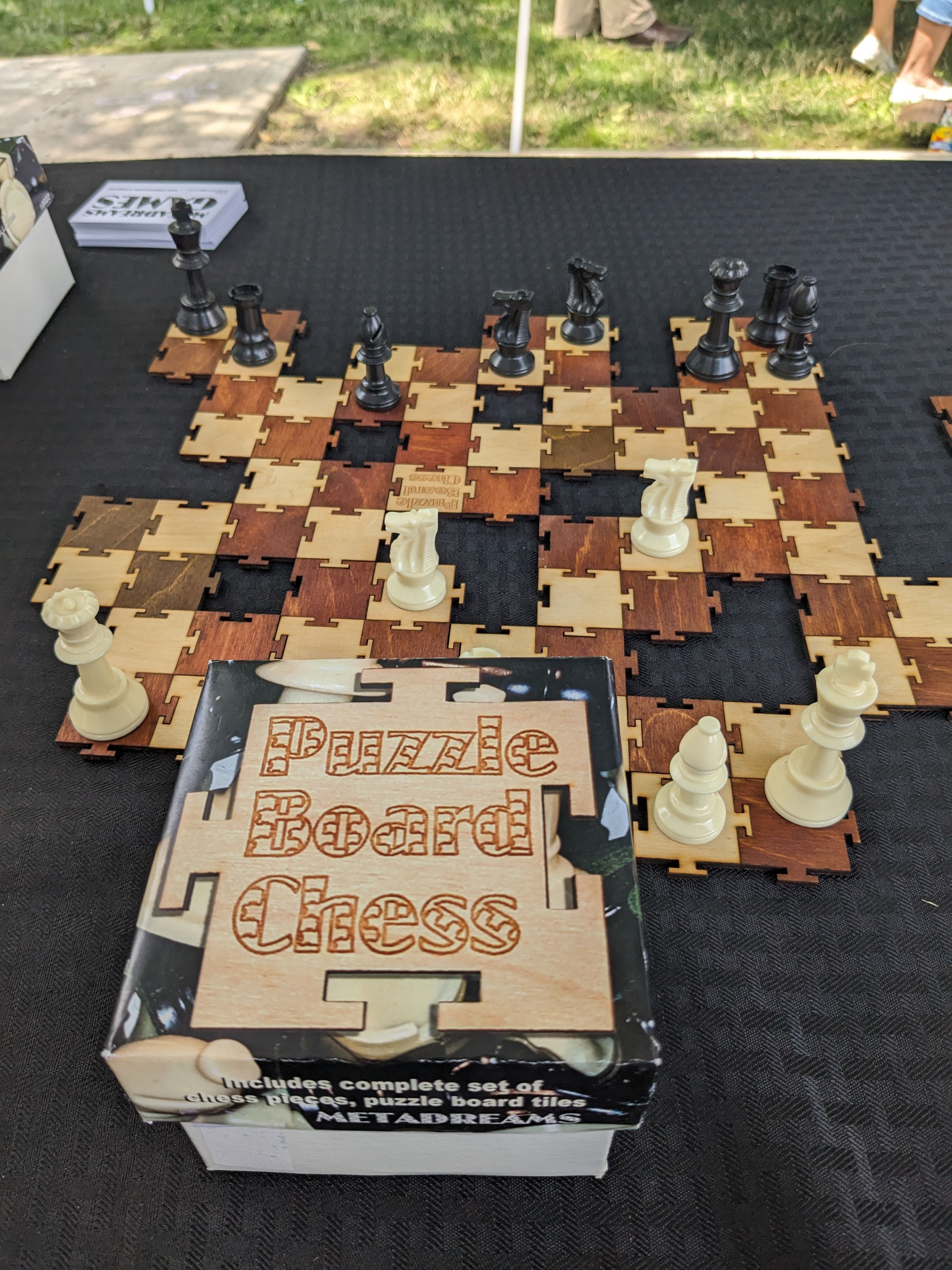
The standard chess board has been broken up into 16 tiles (plus 1 extra) of four squares each. Now, a big part of the strategy is how to lay your tiles and deploy your pieces to best achieve checkmate.
The puzzle tiles create chasms and gaps that change the dynamic of chess. Each player gets 8 puzzle board tiles. An extra neutral piece is placed on the table first.
The players randomly choose who goes first and take turns adding their puzzle tiles to the game board. If necessary, place one of your chess pieces on your tiles to avoid confusion about who placed which tile. After the board is completed and all tiles connect, arrange your chess pieces on your tiles where you think they work best for your strategy and the landscape of the battlefield. Whoever placed the first tile is the first to move a piece to begin a game.
Pieces move as they do in a standard game, EXCEPT:
 There are no PAWNS. They don’t work on this kind of board.
 Since KNIGHTS can jump, that means they can jump over gaps in the board. But they must still move in the classic “L” shape and be able to land on a physical square.
 Even for tiles that don’t connect by tabs, if their corners adjoin, BISHOPS may be able to cross from one piece to the next.
—description from the publisher
Rules and strategy
Source knowledge for this edition still needs preparation or review.
Prepare rules knowledge
Source rules are needed before we can answer reliably.
Ask about Puzzle Board Chess
Answers show their sources. When the evidence is missing or unclear, we’ll say so.