Paladini
About this game
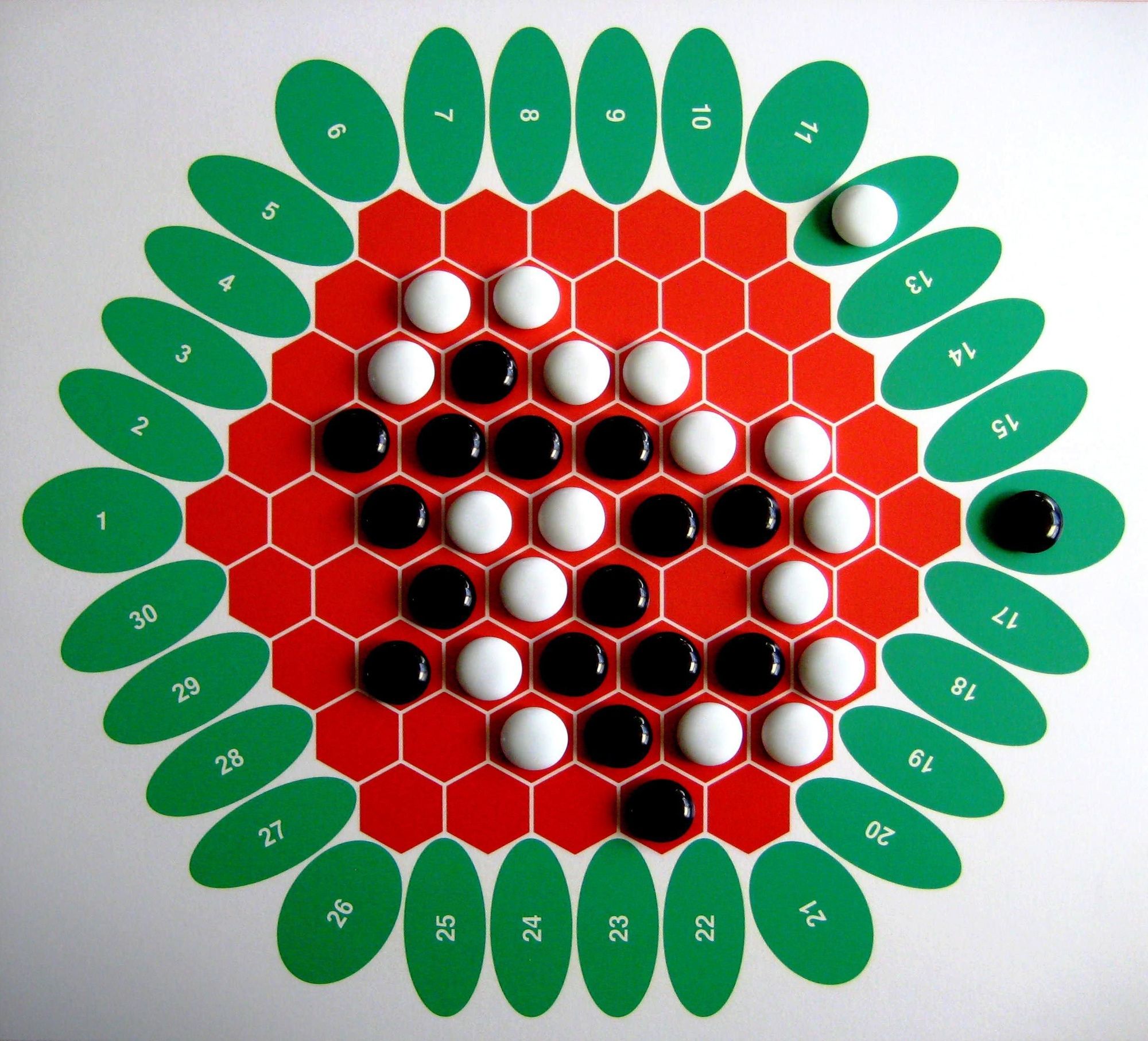
Paladini Paladini is played on a hexagonal board (4, 5, or 6 spaces per side). Depending on the board size chosen, each player has 3 to 5 paladins. The first to be played is the "captain" paladin. The others can be played later from the supply. On their turn, each player must place a new hexagonal tile on the board, paying attention to its orientation, and then place a paladin on it, either by moving it from another tile (if possible) or by playing one from the supply. There are four types of hexagonal tiles. Each paladin placed on a knight, archer, or crossbowman tile can move in three directions (knight) or two directions (archer and crossbowman) in a straight line, for a number of hexes of their choice (but without moving beyond other tiles). The movement lines depend on the type of tile and the orientation chosen when placing it. On the other hand, a paladin placed on a squire tile can move in all six directions, but only one hex. To move a paladin already on the board, the new tile must be on a hex within reach of the paladin. If the played tile is unreachable, a new paladin must be played from the supply. Under no circumstances may the new paladin be on a hex reachble by opposing paladins. A paladin can attack one or more enemy paladins. An attacked paladin must move or it will be eliminated. When a player runs out of moves or loses their captain, the opponent wins the game. —description from the designer
What it feels like
Explore these mechanics in Cardboard
Start an original prototype from reusable design patterns—not this game's content.